Saturday, April 30, 2022

The Greatest Generation (Part One)

 (Abner - Doll)


    Over the next few weeks, in this Memorial Day month, I will be publishing information about the Fairfax residents who served in World War II. Look for posts each Sunday until the end of month.

    When I started this project in Fall 2021 to identify and honor Fairfax’s World War II veterans, I expected to find maybe 30 to 40 men who served. Instead, I identified over 150 men and women. Some Fairfax parents had two or more children who served. Several of our residents who served were immigrants or the children of immigrants, including Germans. Several married right before or during the war and divorced shortly after the war ended. Some were able to use skills from their pre-war occupations in their wartime assignments, while others received training that led them to post-war careers. As of the time I am writing this, to the best of my knowledge only one of our World War II veterans is still living. 

    A few words about how I came up with this list. My criteria for including veterans were that they resided in what is now the Village of Fairfax at the time they enlisted and that they served between September 1, 1940 and July 31, 1947. This means that people who were born and grew up in Fairfax, but moved away prior to the war aren’t included. The list also doesn’t include those who served and later moved to Fairfax, sometimes living here for decades and raising their families here. I used records like draft registration cards, census records, newspaper articles, and city directories to determine Fairfax residency, but it is still entirely possible that I have inadvertently included or omitted someone.

    I have tried to include each veteran’s full name, rank and military branch, dates of birth and death, dates of service, and a little additional information. Admittedly, this information is not complete and, especially with regard to final military rank, may not be correct. To gather this information, I used publicly available information and paid databases to which I subscribe. I found a lot of information on some veterans and very little on others. If you are interested in information about obtaining World War II veterans’ service records, please visit https://www.archives.gov/veterans.

    I included pictures of the veterans when they were available. Some were from digitized newspaper articles and are of very poor quality. I would like to thank the generous people who granted me permission to publish their photos of their military family members. 

    I consider this a work in progress and hope to update it as additional information becomes available. If you have documentation that could help me correct or supplement this information, please email it to FairfaxOhioHistory@gmail.com.


NAME: Orville Abner ⭐
RANK & BRANCH: Sergeant, U.S. Army
DATES OF BIRTH & DEATH: June 26, 1920 - April 1, 1943
DATES OF SERVICE: October 28, 1941 – April 1, 1943
ADDITIONAL INFORMATION: Orville Abner went through basic training at Camp Wheeler, Georgia. By August 1942, he was stationed in Northern Ireland. He was serving in Tunisia with the 168th Infantry Regiment, 34th Infantry Division when he was killed in action on April 1, 1943. He is buried at the North Africa American Cemetery in Carthage, Tunisia.
From the Cincinnati Post, August 24, 1942


NAME: Stephen Burgess Anglin
RANK & BRANCH: Platoon Sergeant, U.S. Marine Corps
DATES OF BIRTH & DEATH: June 11, 1917 – March 1, 1997
DATES OF SERVICE: Approximately 1939 - 1945
ADDITIONAL INFORMATION: Stephen Anglin was a 1936 graduate of Terrace Park High School and attended Wilmington College until he enlisted in the Marine Corps. In 1939, he served at the Naval Ammunition Depot at Iona Island, New York. By 1942, he was serving in the Pacific Theater. He participated in the Battle of Midway and other major engagements.

From the Cincinnati Post, March 10, 1944

NAME: Clarence Balash
RANK & BRANCH: Aviation Machinist’s Mate 1st Class, U.S. Navy
DATES OF BIRTH & DEATH: May 15, 1911 – May 25, 2002
DATES OF SERVICE: March 9, 1942 – September 4, 1945
ADDITIONAL INFORMATION: Born in Hungary, Clarence Balash became a naturalized American citizen on November 25, 1935. He enlisted in the Naval Reserve in March 1942, trained at Great Lakes, Illinois, and served on the USS Monterey from July 1943 until August 1944.

NAME: Charles David Beckler
RANK & BRANCH: Private, U.S. Army
DATES OF BIRTH & DEATH: December 23, 1922 – December 22, 1985
DATES OF SERVICE: January 20, 1943 – October 4, 1943
ADDITIONAL INFORMATION:

NAME: Delbert Hurshel Berry
RANK & BRANCH:  Master Sergeant, U.S. Army
DATES OF BIRTH & DEATH: July 28, 1907 - December 5, 1973
DATES OF SERVICE: August 25, 1943 - November 29, 1945
ADDITIONAL INFORMATION: Delbert Berry served in Company A, 361st Engineers Special Service.

NAME: Stanley Joseph Blanck
RANK & BRANCH: Staff Sergeant, U.S. Army
DATES OF BIRTH & DEATH: June 24, 1924 – March 13, 1982
DATES OF SERVICE: February 24, 1943 – July 22, 1945
ADDITIONAL INFORMATION: Stanley Blanck served at a Ninth Air Force Marauder station in England.
 
NAME: Anna Marie Blankemeyer Hoffman
RANK & BRANCH: Corporal, U.S. Women’s Army Corps
DATES OF BIRTH & DEATH: February 1, 1920 – May 7, 2016
DATES OF SERVICE: December 12, 1942 – October 12, 1945
ADDITIONAL INFORMATION: Anna Blankemeyer, her brothers Anthony and Bernard, and sister Margaret all served during World War II. She served stateside during the war as a cook and baker. After her service, she volunteered in a number of veterans’ organizations, including 29 years with the Veterans’ Administration. In 2002, Anna was interviewed for an oral history about her service which can be found at https://njmilitiamuseum.org/anna-hoffman.
 
NAME: Anthony Arthur Blankemeyer 
RANK & BRANCH: Private First Class, U.S. Army Air Forces
DATES OF BIRTH & DEATH: October 3, 1918 – March 12, 2001
DATES OF SERVICE: September 7, 1942 – February 21, 1946
ADDITIONAL INFORMATION: Anthony Blankemeyer was a 1936 graduate of Purcell High School. He served stateside during the war, including in Missouri and Clovis, New Mexico.

NAME: Bernard Joseph Blankemeyer
RANK & BRANCH: Sergeant, U.S. Marine Corps
DATES OF BIRTH & DEATH: July 13, 1925 – March 14, 1995
DATES OF SERVICE: August 1943 – approximately 1946
ADDITIONAL INFORMATION: Bernard Blankemeyer was stationed at Marine Corps Air Station Miramar in San Diego, California where he served as a truck driver and welder.
 
NAME: Margaret Rose Blankemeyer Gwynn
RANK & BRANCH: Sergeant, Women’s Army Corps
DATES OF BIRTH & DEATH: October 16, 1921 – October 19, 2004
DATES OF SERVICE:
ADDITIONAL INFORMATION: Margaret Blankemeyer served at the Port of Embarkation in Seattle, Washington.

NAME: James Edward Bolanger
RANK & BRANCH: Seaman Second Class, U.S. Navy
DATES OF BIRTH & DEATH: February 16, 1928 - September 16, 1969
DATES OF SERVICE: April 23, 1946 - November 25, 1946 and November 1, 1950 - October 30, 1952
ADDITIONAL INFORMATION: James Bolanger also served during the Korean War.

From Plainville High School yearbook, 1944


NAME: John Martin Bramel
RANK & BRANCH: Private First Class, U.S. Army
DATES OF BIRTH & DEATH: September 3, 1908 – March 15, 1980
DATES OF SERVICE: 1942 - 1945
ADDITIONAL INFORMATION: John M. Bramer was a home builder who constructed a number of homes in the area, including several in Mariemont.

NAME: Karl William Brennecke
RANK & BRANCH: Technical Sergeant, U.S. Army
DATES OF BIRTH & DEATH: June 20, 1921 – March 18, 1976
DATES OF SERVICE: September 7, 1942 – November 8, 1945
ADDITIONAL INFORMATION: Karl William Brennecke was a 1939 graduate of Terrace Park High School.

NAME: Donald Edward Bronson
RANK & BRANCH: Motor Machinist’s Mate Third Class, U.S. Navy
DATES OF BIRTH & DEATH: February 3, 1914 – December 18, 1978
DATES OF SERVICE: Approximately January 1944 – November 1945
ADDITIONAL INFORMATION: 
From the Cincinnati Post, July 4, 1944

NAME: Albert Joseph Brunck
RANK & BRANCH: First Sergeant, U.S. Army
DATES OF BIRTH & DEATH: April 17, 1919 - June 30, 1909
DATES OF SERVICE: February 21, 1944 - January 1, 1946
ADDITIONAL INFORMATION:  Albert Brunck graduated from Purcell High School. He served in Europe. His brothers Charles, Francis, and William also served in World War II.

From Purcell High School yearbook, 1937


NAME: Charles Edward Brunck
RANK & BRANCH: Private First Class, U.S. Army
DATES OF BIRTH & DEATH: July 11, 1916 - May 17, 1947
DATES OF SERVICE: March 30, 1942 - December 18, 1945
ADDITIONAL INFORMATION:  Charles Brunck served in the 200th Port Company Transportation Corps. His brothers Albert, Francis, and William also served in World War II.

NAME: Francis Paul Brunck
RANK & BRANCH: Sergeant, U.S. Army Air Corps
DATES OF BIRTH & DEATH: January 15, 1914 - June 16, 2003
DATES OF SERVICE: February 8, 1943 - March 16, 1946
ADDITIONAL INFORMATION:  Francis Brunck's brothers Albert, Charles, and William also served in World War II.

NAME: William Thomas Brunck, Jr.
RANK & BRANCH: U.S. Navy
DATES OF BIRTH & DEATH: March 2, 1912 - February 17, 1995
DATES OF SERVICE: August 4, 1943 - October 10, 1945
ADDITIONAL INFORMATION:  William Brunck's brothers Albert, Charles, and Francis also served in World War II.

NAME: Walter David Clark
RANK & BRANCH: U.S. Army and U.S. Air Force
DATES OF BIRTH & DEATH: July 21, 1924 – May 14, 2017
DATES OF SERVICE: 1943 - 1969
ADDITIONAL INFORMATION: A 1942 graduate of Plainville High School, Walter Clark was stationed in the South Pacific during World War II. After the war, Clark transferred to the Air Force and served in Japan, Korea, and around the United States. In 1963, he earned a bachelor’s degree in Meteorology from Texas A & M University. He and his family moved to Massachusetts in 1965, where he monitored solar activity for the Apollo space program. After his retirement from the Air Force, he was a teacher for 23 years and volunteered with veterans.
 
NAME: Edward James Collins, Jr.
RANK & BRANCH: Private, U.S. Army
DATES OF BIRTH & DEATH: June 14, 1925 – July 5, 1989
DATES OF SERVICE: June 19, 1942 – December 3, 1945
ADDITIONAL INFORMATION: Edward James Collins served in an armored division in Europe and was wounded in action in France on July 27, 1944.
 
NAME: Howard Henshaw Collins
RANK & BRANCH: Technician Fifth Grade, U.S. Army
DATES OF BIRTH & DEATH: November 17, 1910 – January 30, 1995
DATES OF SERVICE: March 3, 1942 – December 24, 1945
ADDITIONAL INFORMATION: Prior to the war, Howard Collins was a singer, specifically a baritone, who worked with the WPA (Works Progress Administration) Choral Unit. He won an amateur contest at WLW Radio in 1935 and performed on the radio. He sang solos, duets, and in the choir at Fairfax Presbyterian Church, even on occasion during the war. He served at Fort Knox, Kentucky.
 
NAME: Benjamin Franklin Cook, Jr.
RANK & BRANCH: Private First Class, U.S. Army Air Forces
DATES OF BIRTH & DEATH: March 11, 1924 – April 14, 1993
DATES OF SERVICE: December 23, 1942 – January 19, 1947
ADDITIONAL INFORMATION: Benjamin Cook served at Ferndale, California. His father was wounded in action in World War I. 

From the Cincinnati Times Star, September 27, 1943

 
NAME: Joseph Michael Cordesman
RANK & BRANCH: Private, U.S. Army
DATES OF BIRTH & DEATH: October 19, 1913 – December 11, 1985
DATES OF SERVICE: June 27, 1941 – September 29, 1945
ADDITIONAL INFORMATION: As of April 1942, Joseph Cordesman was serving with the 80th Armored Regiment, 8th Armored Division at Fort Knox, Kentucky.

NAME: John Bishop Cordrey
RANK & BRANCH: Corporal, U.S Army
DATES OF BIRTH & DEATH: October 20, 1904 - July 1, 1988
DATES OF SERVICE: December 23, 1942 - August 20, 1943
ADDITIONAL INFORMATION:  
 
NAME: Gordon Stanley Cowdrey 
RANK & BRANCH: Corporal, U.S. Army Air Forces and U.S. Air Force
DATES OF BIRTH & DEATH: September 24, 1919 – March 2, 1991
DATES OF SERVICE: April 22, 1942 - January 6, 1946, October 14, 1950 - October 13, 1951
ADDITIONAL INFORMATION: As of December 1942, Gordon Cowdrey was stationed at Ellington Field, Texas. He served in both World War II and the Korean War.

From the Cincinnati Post, December 14, 1942

NAME: James Daniel Croswait
RANK & BRANCH: Private, U.S. Army
DATES OF BIRTH & DEATH: February 19, 1925 – January 23, 2004
DATES OF SERVICE: March 27, 1943 – November 4, 1945
ADDITIONAL INFORMATION:
 
NAME: Calvin Curnayn
RANK & BRANCH: Seaman First Class, U.S. Navy
DATES OF BIRTH & DEATH: February 23, 1911 – December 17, 1981
DATES OF SERVICE: September 1, 1943 – November 3, 1945
ADDITIONAL INFORMATION:
 
NAME: Fred A. Czinege
RANK & BRANCH: U.S. Marine Corps
DATES OF BIRTH & DEATH: March 26, 1919 – November 16, 1994
DATES OF SERVICE: January 7, 1943 – January 19, 1946
ADDITIONAL INFORMATION: Fred Czinege’s brother Harry served in the U.S. Navy during the war. Prior to enlisting in the Marine Corps, Fred served as a corporal in the Ohio State Guard. This photo from the July 29, 1942 Cincinnati Enquirer shows Fred and his comrades enjoying some downtime during maneuvers at Camp Zaleski:


NAME: Harry John Czinege
RANK & BRANCH: Shipfitter Second Class, U.S. Navy
DATES OF BIRTH & DEATH: October 5, 1921 – October 31, 1969
DATES OF SERVICE: August 11, 1942 – August 1, 1945
ADDITIONAL INFORMATION:
 
NAME: Raymond William Daniels
RANK & BRANCH: Private, U.S. Army
DATES OF BIRTH & DEATH: December 29, 1918 – January 20, 1998
DATES OF SERVICE: December 26, 1944 – January 23, 1946
ADDITIONAL INFORMATION:

NAME: Charles Elliott Davis
RANK & BRANCH: Seaman First Class, U.S. Navy
DATES OF BIRTH & DEATH: November 9, 1914 - October 1, 1989
DATES OF SERVICE: September 27, 1943 - 
ADDITIONAL INFORMATION:  Charles Davis served on the USS Porter (DD-800).
 
NAME: Harold Frederick Doerr
RANK & BRANCH: Private, U.S. Marine Corps
DATES OF BIRTH & DEATH: September 11, 1914 – October 10, 2002
DATES OF SERVICE: April 27, 1944 – June 29, 1946
ADDITIONAL INFORMATION: Harold Doerr was a graduate of Cincinnati’s Automotive Trades School. While serving, he graduated from the Marine Aviation Clerical School in San Diego, California.                                                                                         
 
NAME: Leo Francois Doll, Jr.
RANK & BRANCH: Ship’s Serviceman (Laundry Man) Second Class, U.S. Navy
DATES OF BIRTH & DEATH: October 11, 1908 – October 28, 1981
DATES OF SERVICE: February 5, 1944 – December 11, 1945
ADDITIONAL INFORMATION: Prior to being drafted, Leo Doll was a foreman for Model Laundry. During the war, he served as a laundry worker on the USS Consolation, a hospital ship in the Pacific Fleet. 


Sunday, March 27, 2022

The Hit King

     There isn’t much to say about Pete Rose that hasn’t already been said. But there is one small piece of Pete’s story that happened here in Fairfax in June 1981.

    Back in the day, country music radio station WUBE fielded a slow-pitch softball team that played for charity. The team was formed in 1978 by former Reds bullpen catcher Gary Waits, and the proceeds from admission charges were normally split between the Ruth Lyons Children’s Christmas Fund and the opposing team’s organization. Retired major league athletes, including former Reds, Bengals, and Royals players joined local celebrities in these games. There was a group of regular WUBE players, but there were usually special guests as well. Some of the local celebrities who played for the All-Stars at some point were Anthony Munoz, Dave Lapham, Oscar Robertson, Bob Braun, Jim O’Toole, Fred Norman, Johnny Bench, and Pete Rose.

    To very quickly recap Pete Rose’s career to this point, after 16 seasons with the Cincinnati Reds, Rose became a free agent and signed a four-year contract with the Philadelphia Phillies. As the 1981 season began, Rose was approaching Stan Musial’s National League hits record of 3,630. On Wednesday June 10, the Phillies faced the Houston Astros and future Hall of Fame pitcher Nolan Ryan. Over 57,000 fans packed Veterans’ Stadium, Stan the Man was there to offer his congratulations, and 3,631 balloons were ready to be released when Rose got the record-breaking hit. In his first at-bat on a 2-1 count, Rose hit a single to center field, tying Musial’s record. But the record-breaking hit wouldn’t happen that night. Ryan (being Nolan Ryan) struck out Rose in his next three at-bats.

    As of the June 10 game, Rose had a 14-game hitting streak, was the National League season leader in hits, and was tied for the National League all-time hits record. He was looking forward to his next game on Friday June 12, when the Phillies would face the Atlanta Braves and another future Hall of Fame pitcher, Gaylord Perry. That game was never played, though, because Major League Baseball players went on strike that day. Pete packed up and headed for Cincinnati where he believed he would be best able to stay in shape for the resumption of the season. And that is how Pete Rose, though no longer a Cincinnati Red, became available to play in a charity softball game in Fairfax during the baseball season.

    The Fairfax Youth Organization (FYO) coaches had played the WUBE All-Stars on three previous occasions and, from what I have been told, had won all three games. So, on June 17, 1981, the FYO coaches again played the WUBE All-Stars on the lower field at Fairfax School. Pete Rose was apparently expected because a parking space had been reserved for him. A couple of people recall him pulling in, driving his red Maserati . . . or maybe it was a Porsche. Anyway, Pete had a sweet ride.

    The Cincinnati Enquirer estimated that 500 spectators attended the game. During batting practice, one of them yelled “Traitor!” to Rose for jumping ship from the Reds to the Phillies. However, many more fans welcomed Rose and approached him for autographs.

    Among those who joined Rose on the WUBE All-Stars that day were his brother Dave, and his former Reds teammates Fred Norman, Jim O’Toole, and Gerry Arrigo.

    Now, the uninitiated might think that a charity slow pitch softball game might not have much significance to Pete Rose. Those of us who watched Pete play know that all competition was significant to him.  The Enquirer described his first at-bat as follows:

 . . . When he batted first in the first inning, he swung at the first pitch. Rose hit the ball sharply at the pitcher, who wore No. 16 with “Squatty” on his back, and Squatty stabbed the ball on one bounce and robbed the great hitter. Rose, the hustler, didn’t run to first. He stared down Squatty.

    I have learned that Squatty was the late Ed Brinson, who was normally the catcher. Personally, I would prefer having Pete stare me down as a pitcher, rather than barrel into me as a catcher (as experienced by Ray Fosse in the 1970 Major League All-Star Game).

    On his next plate appearance, Rose hit a line drive to center field, which was caught.

    Controversy seems to follow Pete Rose and this game was no exception. At his next at-bat, Pete hit a weak ground ball toward third base. The Enquirer described it as a “half-swing,” but a spectator described it to me as a bunt, which wasn’t allowed in the game. Does the picture below show a bunt? Maybe, maybe not. However, I’m sure Pete had good enough bat control that he could use a half-swing in lieu of a bunt to take advantage of a third baseman who was playing deep. Regardless, Pete beat the throw and had a single.


From The New Mexican, June 18, 1981

    The game was stopped with Rose’s teammates throwing a mock celebration at first base and WUBE presenting him with a tee shirt that said “I Saw It, Pete Rose Hit No. 3631 In Fairfax.” No 57,000 fans in attendance, no 3,631 balloons being launched, and no Stan Musial, but maybe his teammates treated Pete to Ches’ CafĂ© after the game. 

    Pete’s take on his hit? “The guy was playing back and you’ve got to play to win. We went on to score four runs after that.”

     Rose had another hit in that game, a clean single to left field and the WUBE All-Stars beat the FYO coaches. The WUBE All-Stars – FYO Coaches game received news coverage around the country because of Pete Rose’s participation at a historic point in his career.

     The Major League Baseball season resumed on August 10, 1981 and Pete Rose and the Phillies faced the St. Louis Cardinals, Stan Musial’s old team. In the eighth inning, Rose hit a single, the real Number 3,631. He was cheered by a capacity crowd at Veterans Stadium and finally congratulated at first base by former record holder Musial.

     In a September 11, 1985 game at Riverfront Stadium against the San Diego Padres, Pete Rose, once again a member of the Cincinnati Reds, singled to left-center field for the 4,192nd hit of his Major League career. He had surpassed Ty Cobb to become the all-time Major League hits leader.


Sunday, January 30, 2022

The School District

     I have always lived in the Mariemont School District, which includes the Villages of Fairfax, Mariemont, and Terrace Park, and a section of Columbia Township that runs along and near Wooster Pike. Although I knew that the Mariemont School District was once the Plainville School District and that Terrace Park once had a school that educated students from kindergarten through 12th grade, I can’t say that I gave much thought to how the Mariemont district was formed or Fairfax’s role in the process.

Plainville District High School

    In the late 1940s, many communities had their own school districts and there were dozens of districts in Hamilton County. Terrace Park, with their one school, had a district. Newtown had a district consisting only of a grade school. The Newtown district paid tuition to Terrace Park to educate their high school students.

    These small districts were overseen by the Hamilton County Board of Education. Many had financial problems and relied heavily on state funding. So, the Ohio Board of Education was exploring ways to reduce expenditures. Studies commissioned by the state recommended consolidation of some districts.

    In the mid-1940s, the county school board proposed consolidation of the Indian Hill and Terrace Park districts. Indian Hill agreed with the plan to consolidate at that time, but Terrace Park did not. When the merger fell through, Indian Hill focused on improvements to their district, including building a new $800,000 school. Indian Hill also successfully added three sections of their community, which had previously been within the Madeira and Terrace Park school boundaries, to their district.

    In 1951, the county board proposed merging the Indian Hill, Madeira, Newtown, and Terrace Park districts. Terrace Park residents, now accepting that their school was in financial trouble, were agreeable to consolidation. Indian Hill, however, was not. Although Indian Hill officials stated that they wished to help their fellow districts, they were not willing to cede control of their district, including their new school, to people outside their community. Further, Indian Hill requested exempted status, made possible by the additional territory added to their district. Exempted status would free them from county board involvement in their affairs. After a court battle, Indian Hill was granted exempted status and Terrace Park’s hopes for a merger with Indian Hill were dashed. Terrace Park and Newtown couldn’t merge with Madeira because the district wouldn’t be contiguous without Indian Hill.

    So, in the mid-1950s, the Terrace Park district was in dire straits. Two-thirds of their school funding came from the state. They had missed out on consolidation with the wealthier Indian Hill district. There was no benefit to consolidating with the struggling Newtown district. The only other possibility was to consolidate with Mariemont.

    At that time, the Mariemont school district consisted of Fairfax, Mariemont, and Plainville. Each of the three communities had an elementary school with the high school located in Mariemont. Mariemont’s residential real estate valuation was boosted by the properties in their industrial area. Of course, Fairfax contributed property taxes but, as Mariemont resident and school board member Arthur Oldham so undiplomatically put it, other areas of the district were “paying the freight” for the children of Fairfax.

    If you read my The Long Road to Incorporation posts [The Long Road to Incorporation (Part One) and The Long Road to Incorporation (Part Two)], you may recall that Fairfax had property that was the envy of every tax-grabbing government entity in the area – the Ford Transmission Plant. Sweetening the pot was the Socony Vacuum Oil Company which was also located in the Red Bank industrial area. Fairfax prevailed against the City of Cincinnati in the battle for the Ford plant and the plant was part of the now-incorporated village. However, the northern part of the Red Bank area of Fairfax extending east to the western side of lower Germania Avenue was part of the Cincinnati School District and had been for decades. Most children in this area attended grade school in Linwood or Madisonville and then went to Withrow High School.

The properties on the left side of the street in this photo of lower Germania Avenue were in the Mariemont School District, but the properties on the right side were in the Cincinnati School District.

    To recap, we had a small, financially strapped Terrace Park school district adjacent to the larger and more stable Mariemont district, but Mariemont couldn't afford to “pay the freight” for yet another community’s students. And, we had two major industrial properties within the Village of Fairfax but located within the Cincinnati school district boundaries. Do you see where this is heading?

    In February 1956, 10 Fairfax families who lived within the Cincinnati School District petitioned the Cincinnati Board of Education to transfer the Red Bank area into the Mariemont School District. The parents explained that Mariemont schools were closer to their homes and being part of the Mariemont district would make it easier for their children to participate in community activities. Transportation was a problem because the children had to walk across railroad tracks, busy streets, or steep embankments to get to a public bus stop because the district didn’t provide school buses for them. Some parents complained that they had to buy a second car so mothers could drive their kids to school or the bus stop. The petitioners were represented by attorney (and future Fairfax mayor) Ralph Mitchell.

    We can only speculate why the petition was filed at this particular time. Was it because with Fairfax’s recent incorporation the Red Bank parents thought it made sense to join the Mariemont district with the rest of the village? Had safety and transportation issues recently become a bigger concern? Did the residents initiate the petition, or did someone persuade them to petition Cincinnati schools about the transfer? Was it just coincidence that this petition by residents in a tax-rich area was filed at the same time that a tax-poor community was seeking a merger with the Mariemont district?

    Not surprisingly, the Cincinnati Board of Education was opposed to transferring this area to the Mariemont district. The property taxes there generated around $230,000 annually in funding for Cincinnati students. The Cincinnati Board requested a hearing on the issue before the State Board of Education.

    The hearing before the State Board took place on June 14, 1956. Ralph Mitchell presented the petitioners’ arguments that transferring the area to Mariemont Schools would save time and money for the families, eliminate the safety hazards the children faced, and allow children to participate in community activities. Cincinnati Board representatives downplayed the transportation issue, saying that they provided transportation to students who lived more than two miles from school. They further stated that it was unfair to Cincinnati to take away the hefty tax revenue for the “convenience” of a few students. They said they were open to paying tuition to Mariemont schools for interested students or providing transportation to Cincinnati Schools. The State Board of Education took the petition under advisement.

    On the other front, on July 31, 1956, the Hamilton County Board of Education held a special meeting regarding the consolidation of the Mariemont and Terrace Park districts. Cincinnati board members attended, accusing the Mariemont board of attempting to “steal” the industrially rich area of Fairfax from the district that had long educated the children living there. They argued that Mariemont wanted the Red Bank area because it included the Ford plant and that Mariemont and Terrace Park were pursuing a merger to convince the State Board to transfer the Red Bank area to the Mariemont district. Arthur Oldham admitted that the Mariemont board wanted to help Terrace Park but needed the Red Bank area to make the merger feasible. Cincinnati asked the county board to defer a decision on the Mariemont-Terrace Park merger until after the state rendered a decision on the Red Bank matter.

    On August 7, the Hamilton County Board of Education unanimously approved the Mariemont-Terrace Park merger. Arthur Oldham issued the following statement on behalf of the Mariemont Board:

Provided the state board of education approves the transfer of the Fairfax area, as petitioned, to the Mariemont Exempted Village School District, the Mariemont board will be glad to accept the transfer of Terrace Park local school district to the Mariemont school district. If, however, the state board does not approve the Fairfax area transfer, as petitioned, it will then be necessary for the Mariemont board to withhold its decision on this proposal until a more comprehensive study of all pertinent factors can be completed.

    Oldham further said that as much as Mariemont wanted to help Terrace Park out of its difficult position, the Mariemont district already had the highest school tax rate in the county and the board didn't want a merger to add a financial burden to taxpayers.

    On August 13, the State Board of Education unanimously denied the petition to transfer the Red Bank area to the Mariemont School District.

    The families in the disputed area did get some assistance beginning with the 1956-57 school year. Cincinnati schools provided bus transportation for the children in the Red Bank area to Linwood School. They also began paying tuition for the children on the western side of lower Germania so they could attend Mariemont schools with their neighbors across the street.

    As we now know, even without the property taxes from the Ford and Socony plants, Terrace Park became part of the Mariemont School District beginning with the 1957-58 school year. Plainville School closed after the 1956-57 school year and the Plainville children began attending Terrace Park Elementary.

    In the next decade, there were at least three more petitions requesting that the Red Bank area be transferred to the Mariemont District, all of which failed. However, in May 1958, the Ohio Board of Education transferred the area to the east of Red Bank Road, which included the western side of lower Germania and the future location of the Virginia Avenue business park, from Cincinnati Schools to the Mariemont District.

    This 2010 school district boundary map from the Census Bureau (census.gov) shows the current boundaries of the Mariemont School District. The district is outlined by the purple circles:


    A closer look at the Fairfax portion of the map shows how much of the village is excluded from the Mariemont district. The western boundary of Fairfax is formed primarily by Red Bank Road.


    Today, there is only one remaining residence within the Village of Fairfax that is part of the Cincinnati district, but to this day, the property owners of the businesses on Fair Lane, Ford Circle, and much of Red Bank Road still pay school property taxes to Cincinnati. 

Sources

Cincinnati Enquirer, various dates, 2/28/1956 - 5/13/1958

Cincinnati Post, various dates, 3/3/1956 - 8/3/1956

Eastern Hills Journal, 4/25/1984

Detailed sources available upon request.


Friday, December 31, 2021

The Lighter Side

     Part of my process in preparing to start this blog was to download every available digitized newspaper article about Fairfax that I could find. These articles are a great help in composing articles about important events in our village history. However, there were also a good number of human-interest stories. Although these aren’t necessarily the most significant stories, they are often lighthearted and give us an entertaining glimpse of life in the past. As you review these stories, please think about which one may have been most highly fictionalized. I would love to hear your comments.


Lion on the Loose

    It’s not unusual these days to hear about animals roaming the streets of Fairfax: escaped dogs looking for a little excitement, deer taking a morning stroll through the streets, and the occasional no-account coyote searching for trouble. However, in January 1936, Fairfax residents briefly had a bigger animal control concern.

     A January 4, 1936 Cincinnati Enquirer article stated that Harry Miller of Germania Avenue reported that he spotted a lion on a patch of snow near the creek, around 150 to 200 feet from his home. Mr. Miller grabbed a shotgun, fired at the animal, then called the Hamilton County Sheriff’s Department. Three deputies were sent to the scene, where they were joined by a half-dozen well-armed residents for a lion hunt. The posse searched several hours and didn’t find the lion, but reported that they found paw prints in the snow that were larger than those of a dog.

     There had been lion sightings earlier in the day by a woman who lived on Blaney Avenue in Madison Place and at the Duttenhofer estate on Erie Avenue in Hyde Park. Research by the Enquirer reporter determined that it was certainly possible that a lion could roam between Ault Park or Hyde Park Country Club and Fairfax undetected.

     The lion hunt in Fairfax followed a more extensive search the day before in the area of Avoca Park on Wooster Pike, east of the Newtown Bridge. This search was also unproductive.

    Surprisingly, there were no further reports of lion sightings in Fairfax.


The Seven Leaf Clover

    The May 27, 1936 Cincinnati Post brings us the story of Mrs. Frank Schaffner, who found a seven-leaf clover while walking near her home at the corner of Hawthorne and Southern. As we all know, four-leaf clovers are supposed to bring the finder good luck. Mrs. Schaffner did not keep her clover, however, stating “I’ve found lots of them with four, five, and six leaves and never noticed any extra good luck following.”


Scrap Barrel Poem

    During World War II, the U.S. government asked citizens to turn over certain scrap items that were in short supply to help with the war effort. These items included metal, rubber, newspapers, and even kitchen fat. There were scrap barrels on street corners and scrap drives to encourage participation. This picture isn’t from Fairfax, but shows a scrap drive and scrap barrels.


Accessed from Lehigh County Historical Society, http://www.lchs.museum/ww2/scrap.htm

     The January 15, 1943 Cincinnati Post explained how Fairfax came to get a scrap barrel at the corner of Bedford and Belmont. Mrs. Lottie Scott of Bedford sent the following poem to the Weekly Madisonville Bulletin about the lack of a scrap barrel in Fairfax:

                     When riding on the bus to town                                                                                                        We see on corners everywhere,                                                                                                            Red, white and blue barrels loaded down                                                                                            With scrap to fight the Axis over there.

                     Over here in Fairfax, never do we see                                                                                                These barrels for this particular use;                                                                                                    It has often occurred to me                                                                                                                Much scrap could be found in our refuse.

                     May I make this one suggestion                                                                                                        We receive barrels for our community;                                                                                                Living back from the more traveled section                                                                                        We cannot carry scrap so easily.

                     Back on Belmont and Bedford Avenue                                                                                                We have scraps that we would like to give;                                                                                        So send us a barrel of red, white and blue                                                                                            We too love the country in which we live.


Tarzan and His Apes

    The April 24, 1947 Cincinnati Post reported on a complaint filed with the county police by Germania Avenue resident Howard Wood. Mr. Wood alleged that a man identified only as “Tarzan” cruised the streets nightly with his “three barking apes.” Mr. Wood wasn’t as concerned with the animals as he was with “the allegedly wreckless manner in which the driver operated his ape-laden truck.” Mr. Wood said that the driver struck a pole on Watterson Avenue. The driver summoned a wrecker and he and his passengers left the scene before county police arrived.

     A search for “Tarzan” led investigators to a carnival set up on Kellogg Avenue, though the operators said the carnival had no animals.

     What I wouldn’t give to have seen the apes cruising Fairfax! I wonder if they hung around at Frisch’s?


Fairfax School Barricade

    The April 17, 1952 Cincinnati Times-Star reported that Mariemont Schools would erect a barricade in the driveway of Fairfax School to prevent the hot rod racing that had occurred there within the past week. Tire marks were found on the school lawn.

     An additional problem reported by residents was that the school parking lot was being used after dark as a “spooning place” by young couples. The school district would address that issue by prohibiting parking in the lot after school hours.

     Poor kids! Nowhere else in the area for them to drag race or “spoon!”


The Daredevil

    So, what else did Fairfax teenagers do for fun back in the 1950s? The June 8, 1959 Cincinnati Enquirer told the story of 15-year-old Gary Hodge, whom Fairfax patrolman Charles Doughton and fireman “Smoky” Whiteford found clinging to a transmission tower near Red Bank Road, 30 feet above the ground.  Gary told the men that he had climbed the tower “to get a good look around.” He said he had fallen 70 feet down the tower and broke his fall by grabbing a girder.

     He sustained only bruises and was released from Our Lady of Mercy Hospital in Mariemont only 10 minutes after arriving.


Mayor Who?

    In his June 25, 1963 column in the Cincinnati Post & Times-Star, Si Cornell revealed that Fairfax mayor Ronald George Cribbet had not used his legal name for the first 40 years of his life. He had recently gotten a birth certificate for the first time and learned that his legal name was actually George Roland Cribbet. Everything from his home to his Social Security card was in the name of Ronald George. Mrs. Cribbet was quoted as joking, “I’m not married to you!” The mayor was in the process of legally changing his name to Ronald George.


Typewriter Cake

    Cincinnati Post columnist Si Cornell wrote in the May 14, 1975 edition about the typewriter cake Betty McLaughlin of Fairfax created for his birthday. Mrs. McLaughlin tried to give Si the cake for no charge because it was her first attempt at a typewriter cake, but he paid her for it nevertheless. She typically charged five dollars for a cake.

     The cake was pale green like Si’s typewriter and had chocolate keys. The only inedible part was a cardboard roll she used inside the cake and into which she managed to insert a sheet of paper with the printed message, “Happy Birthday, Si!” He was particularly impressed because the McLaughlin kitchen was just the average home kitchen with no professional equipment.

     I loved finding this story! Mrs. McLaughlin’s youngest daughter was one of my best childhood friends and I was familiar with her beautifully decorated cakes. I remember standing in the kitchen of her Murray Avenue home (which was, in fact, just a regular kitchen) and staring in awe at a cake she had just prepared that was sitting on a table. Such a wonderful memory!


Silent Petie

    The Town & Country column of the December 31, 1981 Cincinnati Post told the story of the pet canary of village councilmember and former Fairfax police chief James Finan. Mr. Finan named the canary Silent Petie because the young bird didn’t sing at first. As the bird matured, it began to sing and Finan was considering dropping “Silent” from his name.

     Silent Petie was apparently not big on hygiene and, according to Finan, would not bathe in the tub in his cage. Finan bathed Silent Petie himself, which the bird neither enjoyed, nor appreciated. Petie would not sing when he was bathed and Finan said “He sulks for a day or two.”


Sunday, December 26, 2021

The Service Station Murder


Sometimes the news of the world seems so distant from our experience in Fairfax. Yes, we know there is violent crime; it’s all around us. However, the really bad stuff seldom touches us as a community. An April 1969 murder disrupted our peaceful way of life.

Troy Lee Carr was a 28-year-old father of two young girls. He and his wife Mary rented a home on Simpson Avenue, which they had moved into in February 1969 because it was close to work and in a nice neighborhood. Troy was employed full-time as a plumbing materials tester at American Standard Company in Mariemont, but also worked part-time as an attendant at Snyder’s Sohio at the corner of Wooster Pike and Simpson. He had worked the day shift at Sohio, but had recently started working the night shift due to the illness of another employee.

Troy Lee Carr, Cincinnati Enquirer, April 9, 1969

On Sunday April 6, 1969, Troy, Mary, and the girls spent the day visiting family in Waynesville, Ohio. After returning home, Troy prepared to begin his 10:00 p.m. shift at Sohio. His part time job was just a couple of blocks from home.

At 4:05 a.m., Mariemont resident Raymond Huber stopped at Snyder’s Sohio on his way to his sales job in Indianapolis. A young man with long hair, a beard, and dressed in black pumped the gas for him. He paid the man, who entered the station to get change. While waiting, Huber noticed a car parked at the side of the station with a person sitting in the passenger side. When the man returned with the change, Huber noticed that the man had blood on him and asked if he had cut himself. The man answered that he had cut himself inside the station.

At 4:20 a.m., two young men from Mount Washington stopped into the station to have a tire repaired. They found Troy Lee Carr in the service station restroom, beaten and clinging to life. The broken cover of a toilet tank was found nearby on the floor. Troy was transported to Our Lady of Mercy Hospital in Mariemont, where he died 85 minutes later. His skull had been fractured and he had cuts on his neck.  In addition to his wife and daughters, Troy’s senseless loss was mourned by his parents and eight siblings.

After hearing of the crime on his car radio, Raymond Huber telephoned Fairfax Police to let them know what he had witnessed earlier that morning.

Station owner Louis Snyder estimated that $100 had been stolen from Carr. $27 was left in the station’s cash register. Carr’s house and car keys were also missing. Snyder said the station had been open 24 hours, but he would begin closing at night because he was “afraid to ask anyone” to work the overnight shift. He said this was the first time his station had been robbed. Sohio offered a $5,000 reward for information leading to the arrest and conviction of the perpetrator.


Fairfax Police Chief James Finan enlisted the assistance of the Ohio Bureau of Criminal Investigation and the Cincinnati Police. The BCI found partial fingerprints at the crime scene, but they were unable to match them to any prints on file.

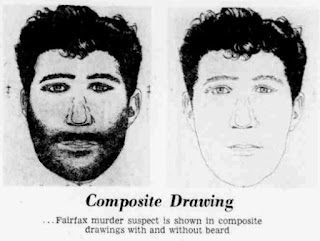
Cincinnati Homicide Specialist Paul Morgan and Fairfax Police Sergeant Paul Ferrara went to Indianapolis to interview the witness who may have encountered the suspect. Raymond Huber helped them make composite renderings of the suspect.

Composite rendering of suspect, Cincinnati Enquirer, April 8, 1969

After a few days, there had been a couple of dozen vague telephone tips, but nothing particularly helpful. People called with sightings based on the composite pictures. In addition, Fairfax Police had compiled a list of 12 individuals who matched the description or who they thought were capable of the crime.

On April 17, Fairfax Police announced that they would have a police artist work with the witness to make refinements to the composite pictures. The composite pictures were made using pre-made facial features that matched the witness description. Chief Finan said the artist rendering should be more detailed and accurate. By this point, police had received over 100 tips but no useful leads.

Artist rendering of suspect, Cincinnati Enquirer, April 28, 1969


The break Fairfax Police had been waiting for finally came on June 14, 1969. An anonymous tip identified Charles V. Helton of Mulberry and Robert Mack of Milford as the suspects. On July 3, police arrested 20-year-old Helton and 18-year-old Mack at their homes, where they lived with their parents. Fairfax Police announced that both men had made statements admitting to their involvement in the crime. Both men were charged with first-degree murder.

On July 7, Helton and Mack appeared in Hamilton County Municipal Court. Helton was bound over to the Grand Jury and held without bond. Mack was remanded to the Juvenile Court. Mack was 17 at the time of the crime.

Charles V. Helton (L) and Robert Mack (R), Cincinnati Enquirer, July 8, 1969

On July 30, Juvenile Court Judge Bernard Schwartz bound Robert Mack over to the Grand Jury to face a first-degree murder charge as an adult. Although he was a juvenile at the time of the crime, he had been arrested on his 18th birthday. On August 8, the Grand Jury indicted both men on first degree murder charges.

Robert Mack was represented by prominent local defense attorney Bernard Gilday, Jr. Gilday appealed the Juvenile Court’s decision to bind Mack over to the Grand Jury, saying that it violated his constitutional rights. His argument was that Mack didn’t receive a proper hearing before the Juvenile Court prior to Judge Schwartz referring the case to the Grand Jury. On January 20, 1970, the First District Court of Appeals dismissed the first-degree murder charge against Mack and ordered that jurisdiction be returned to Juvenile Court for further proceedings.

While the Mack legal issues were being sorted out, Charles Helton pleaded not guilty to the charge filed against him and was awaiting trial.

On March 20, 1970, Sohio implemented a policy at nearly 150 stations requiring that between 10:00 p.m. and 6:00 a.m., customers would need to pay with exact cash or a credit card. The service station attendant would immediately place cash payments in a safe, to which he wouldn’t have access. Sohio hoped that this would prevent robberies of their stations and bodily harm to their employees.

Charles V. Helton’s trial began on April 28, 1970 before Hamilton County Court of Common Pleas Judge Robert V. Wood. Helton was defended by attorney Henry Sheldon. The prosecution was handled by Assistant Prosecutors Calvin W. Prem, Jr. and Fred J. Cartolano. Judge Wood ruled that a taped statement from Helton, made after his arrest, could be entered into evidence. In this statement, Helton said, "I was drunk and got to thinking. Well, I spent my last money on this gasoline and on this oil and I was completely broke. So, the man walked back into the station and when I went to pay him I forced him into the restroom next door and said I wanted the key to the register - told him I wanted the money in his register, and he tried to get out. So, I hit him, then he kicked me, and we started fighting."

Prosecution witness Carol Brown Hinners testified that Helton told her in May 1969 that he had some keys he needed to get rid of and she told him she would take care of them for him. She testified that on another occasion Helton told her he had a fight with a service station attendant and took his keys. Hinners said she contacted the Fairfax Police in June and turned the keys over to them. On cross-examination, she testified that she hadn’t contacted Sohio about the $5,000 reward, nor had they contacted her.

On April 29, 1970, Charles Helton testified on his own behalf. He said he was “pretty high” on the night of the murder. He testified that he and Robert Mack had been drinking and driving around. He said they stopped at the station for gas. After he paid Troy Carr, he told him he was going to murder him. Helton said Carr came toward him and kicked him. A fight ensued and Helton said he threw the toilet tank cover at Carr. He said he proceeded to beat Carr with the cover. He said he picked up the keys from the ground because he thought they belonged to Robert Mack. As Helton left the restroom, he saw a customer at the gas pumps. He pumped the gas for the man and gave him change from his own pocket. He admitted that he had given the keys to Carol Hinners, but denied that he told her to get rid of them.

After eight hours of deliberation, on April 30 the jury found Charles V. Helton guilty of first-degree murder with a recommendation of mercy (which meant he wouldn’t face the death penalty). On May 1, Judge Wood sentenced Helton to life in prison.

Now the attention turned back to Robert Mack. On June 20, 1970, Hamilton County Juvenile Court Judge Olive L. Holmes ruled that Mack should be charged as an adult in the Troy Carr case. Mack’s attorney Bernard Gilday had wanted the case to remain in Juvenile Court so Mack’s sentence wouldn’t continue beyond his 21st birthday.

On August 7, a Grand Jury again indicted Robert Mack for first-degree murder. On August 11, Mack entered a not guilty plea. Court of Common Pleas Judge William J. Morrissey ordered that he be held on $20,000 bond.

On December 2, jury selection began from a pool of 75 potential jurors. Ultimately, five women and seven men were selected.

Robert Mack, Cincinnati Post, January 20, 1971

Robert Mack’s trial began on January 14, 1971. Calvin Prem and Fred Cartolano again handled the prosecution. Deputy Hamilton County Coroner Ben Yamaguchi testified that Troy Lee Carr died from a fractured skull and hemorrhaging. Mary Carr identified the keys that had been taken from the crime scene as her husband’s. In addition, the jury visited Snyder’s Sohio, where the murder occurred.

Testimony on the second day of the trial largely focused on the statement Mack gave to Fairfax Police on the day of his arrest. Bernard Gilday objected to Calvin Prem’s admission of the statement into evidence, saying that the State had not proven that the statement was made voluntarily. Gilday argued that the arresting officers, Sergeants Paul Ferrara and David Planitz had told Mack that giving a statement would make matters better for him and promised to have the charge reduced to second-degree murder. Both Ferrara and Planitz denied this on the witness stand. The statement was allowed into evidence.

Also taking the stand that day was Raymond Huber, who testified that a blood-splattered Charles Helton had pumped gas for him at the Sohio station.

Charles Helton testified that he and Robert Mack stopped at the Sohio station to get oil and then decided to rob it. They followed Carr into the restroom and told him it was a robbery. Carr told them to go home because they were drunk. A fight ensued and Helton testified that he picked up the toilet tank cover and threw it at Carr. He denied beating Carr with the cover, though he couldn’t explain why his skull was fractured and his throat cut. Helton testified that Mack stayed in the car for most of the robbery and murder and that Mack only joined in “to get Carr off my back.”

Robert Mack took the stand in his own defense. He said that his only involvement in the crime was trying to stop the fight between Charles Helton and Troy Carr. He sat in the car until he saw Helton and Carr walking toward the restroom and he got out to see what was going on. He saw the men fighting and said he pushed them away from one another. Helton hit Carr in the head with the toilet tank cover. The cover broke apart and Helton picked up a large piece and continued to beat Carr with it. After the beating, Mack testified that both he and Helton attempted to open the cash register, but weren’t able to.

Mack said that the night of the robbery and murder was the first time he had gone out drinking with Helton and that Helton was talking about "robberies and burglaries and stuff and said he needed money." He testified that around $25 was taken in the robbery and that Helton had given him $2 or $3 and instructed him not to say anything about what had happened. Mack said that he took off his bloody shirt and burned it at the side of a road.

Calvin Prem pointed out there were inconsistencies between Mack’s testimony and the statement he made to Fairfax Police on the day he was arrested. In his statement to police, Mack said he held Carr while Helton beat him with the toilet tank cover: "Charlie said he had seen our faces. I didn't want to hurt the guy. I told Charlie not to hurt him. I helped Charlie to hold him back. The guy was fighting. Charlie took the toilet thing and hit him." Mack denied these statements he made to the police.

In prosecution closing arguments, Calvin Prem recommended conviction of first-degree murder without a recommendation of mercy, which would result in a mandatory death sentence. Fred Cartolano said that both Mack and Helton went to the service station with the intent to rob it, so both were equally guilty of murder under Ohio law.

For the defense, Bernard Gilday said that Robert Mack was a "good boy and a clean-living boy who tried his best to prevent Helton from beating Carr." He said that Mack made a poor judgment that he couldn’t get out of. Gilday said that Mack had been under the influence of Helton, who was a member of a notorious motorcycle gang.

Arguments concluded on the afternoon of January 19, 1971 and the jury was sequestered overnight. After 12 hours of deliberation, on January 20, 1971, the jury found Robert Mack guilty of first-degree murder with a recommendation for mercy. Judge Morrissey sentenced Mack to life in prison. He would be eligible for parole in 20 years. Bernard Gilday entered a plea for a new trial, arguing that Mack’s statement to Fairfax Police should not have been admitted. He also questioned crime scene photos, saying that the body had been posed. Calvin Prem said that the court had already ruled on admission of the statement and that any photo of a dead body must be posed. Judge Morrissey denied the plea for a new trial.